

The publication of this comprehensive, analysis-ready genome data resource is a collaborative effort among researchers led by the Liverpool School of Tropical Medicine (LSTM) in the UK working in partnership with in-country experts and national research institutions across Africa, the Middle East, and Asia, many working in remote or conflict-affected regions.
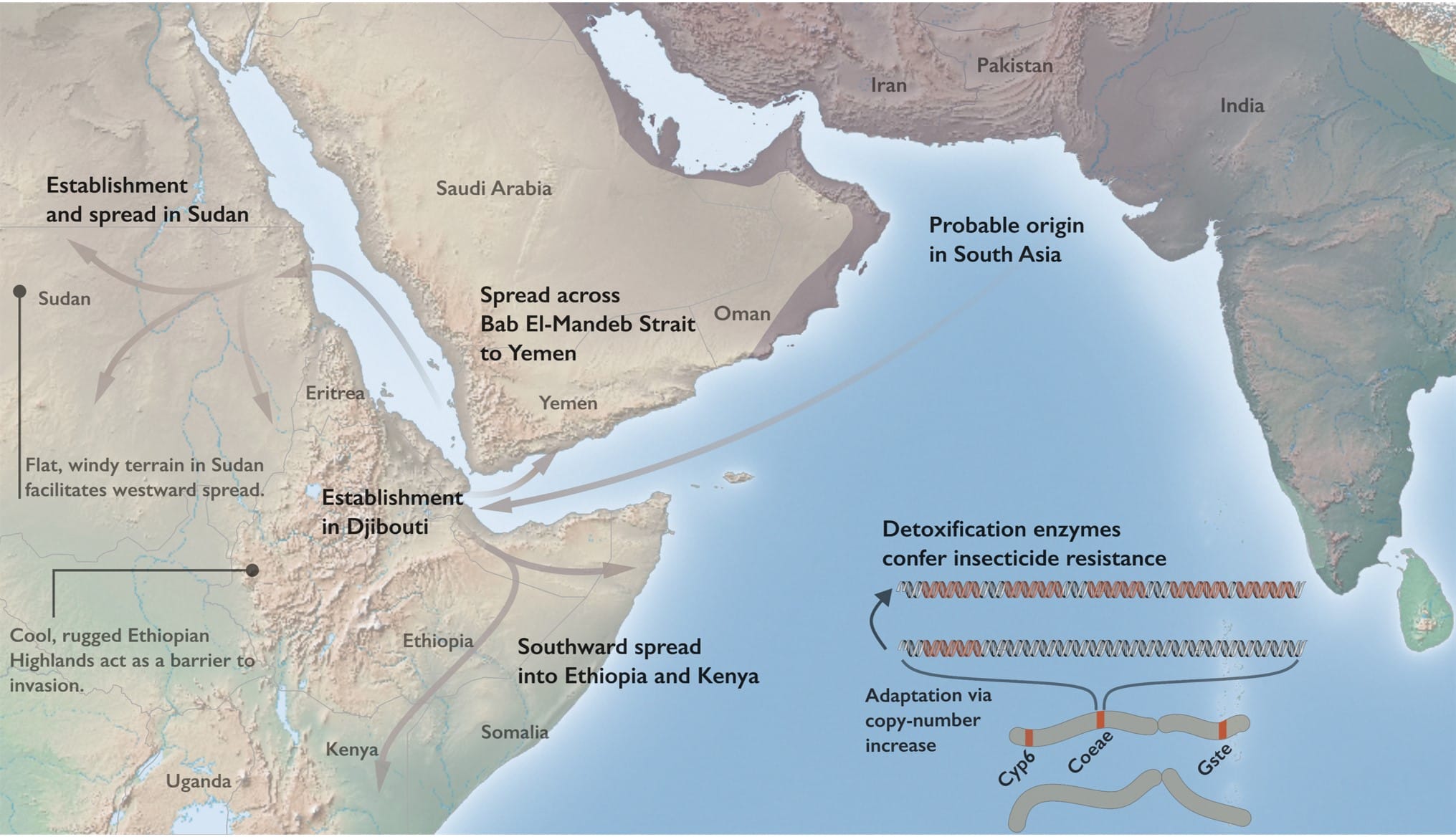
Integrating whole genome sequence data from 639 An. stephensi mosquitoes collected from Ethiopia, Sudan, Djibouti, Yemen, Afghanistan, Pakistan, Saudi Arabia, Iran, Kenya as part of the Controlling Emergent Anopheles stephensi in Sudan and Ethiopia (CEASE) project and literature data from India, this dataset is a source of important genetic insights into the evolution and spread of this invasive malaria vector.
The data has been made publicly available through the Malaria Vector Genome Observatory as the newest Anopheles species resource added to its expanding collection, powering insights for malaria vector genomic surveillance and public health efforts.
“This study is the result of a fantastic collaborative effort, involving scientists from over ten different countries working together to understand where this mosquito is from, how it invaded Africa, and how it can avoid control tools. With the incorporation of the An. stephensi resource into the Vector Observatory, we now have a foundation on data and tools to support the community to translate these results into practice ”said Anastasia Hernandez-Koutoucheva, Chief Data and Technology Officerof MalariaGEN, who manages the technical integration of data resources.
Monitoring invasive threats
Unlike most Anopheles species that primarily inhabit rural areas, An. stephensi has adapted to live in urban environments. Its preferred breeding spots include water storage containers, overhead tanks, and construction sites. Its recent establishment in Africa, where it threatens to introduce malaria into previously unaffected areas, has prompted urgent calls for action. The World Health Organisation lists An. stephensi as one of the four key biological threats to malaria control, highlighting it as a priority to track through the WHO Malaria Threats Map.
Earlier studies on An. stephensi in Africa have already revealed concerning trends, with a 2024 study reporting widespread resistance to common insecticides like pyrethroids and organophosphates, as well as links to surges in malaria transmission in Ethiopia and Djibouti. The release of this dataset will enable scientists to better understand this malaria vector and contribute to vector control efforts in Asia, Africa and beyond.
“Prior to this study there were many competing hypotheses about where this mosquito came from and how it spread. For the first time we can trace the detailed invasion history from its DNA - where it came from, how it got here, and the routes it's taking across the continent. We can also see that resistance to the insecticides used in bed nets and indoor spraying was introduced from Asia -- this mosquito arrived in Africa already armed against our main control tools”, said Tristan Dennis from the Liverpool School of Tropical Medicine, who is the lead author of the study, published today in Science.
The study has also generated further evidence about the power of genetic surveillance as a public health tool. The ability to infer patterns of population connectivity and movement without having to sample comprehensively across conflict-stricken regions has meant that more has been learned about this mosquito than might otherwise have been possible. Going further it can:
- help design new control techniques like gene drives
- diagnose and track insecticide resistance
- compare new populations to this dataset to discern their origin
Learn more about the Anopheles stephensi surveillance project
Meet the mosquito
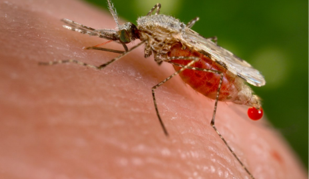
Anopheles stephensi is a mosquito species that has become a significant concern in recent years. Known for its ability to thrive in urban areas, this malaria vector has been expanding its geographic range westward from South Asia and the Arabian Peninsula, notably into Africa.
Fast facts:
- Capable of transmitting both Plasmodium falciparum and Plasmodium vivax parasites
- Primary malaria vector in South Asia and part of the Middle East
- Recently identified as an invasive species in several African countries
- Unlike most African malaria vectors, they can thrive in urban environments.


